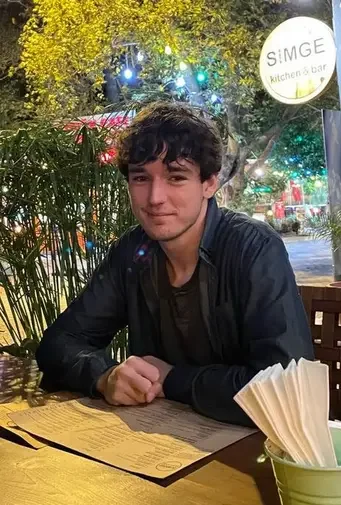
Ben Pennell
PhD Student at the Max Planck Institut Für Astronomie in Heidelberg, Germany.
I work towards modelling and understanding the incidence of different types of binaries using data from the Gaia mission to learn more about our Galaxy.
Recordings of talks I’ve given on science and philosophy can be found here
My papers can be found in an ADS library here or on orcid here
History, Philosophy of Science
My side passion, more than just a hobby, is philosophy, history of science, and ancient history; specifically Roman History. I have a particular interest in the dissection of ancient sources in Latin and Greek and the ancient authors that wrote them. I am also interested in philosophy of science: what is the optimal way that should be done in? And what has been successful about science’s past that we should emulate? Further, I like to think about how science operates in a sociological context.
I have delivered several seminars to astronomers on cosmology in ancient Greek philosophy, and am always looking for an opportunity to bring this historical discussion to more astronomers.
Theoretical Astrophysics
I have a broad range of scientific interests. My research path started by designing and testing sodium-ion batteries in the first year of my Bachelors, and now I work on populations of binary stars.
My aim is to improve the understanding of physics by probing astrophysical phenomena. To approach a more complete understanding of physics at the most fundamental level, we need to learn more about the most extreme elements of the Universe, some of which are only available through astronomical observation. Modern astronomy, with its large surveys such as the Gaia mission, has a wealth of data available, which, if modeled correctly, can be abused to learn a lot.
I feel obligated to advocate for what I believe is the greatest piece of philosophy ever written (to which there is even no close 2nd place): Antoine de Saint-Exupéry’s Le Petit Prince.
This book, an exploration of the importance of the ability to reach into your childlike perspective, has guided my entire life and career. I keep my copy of Le Petit Prince on my desk so I never do a day’s work without its influence. All choices in my life serve a simple goal: to not become like the grown-ups the little prince encounters, who are caught up in details and numbers and lose sight of the true important things in their lives.
It’s not exactly an obscure book to recommend, currently listed 17th on goodreads’s list of best books ever, but nonetheless I recommend (or even request) to all to give it a read.
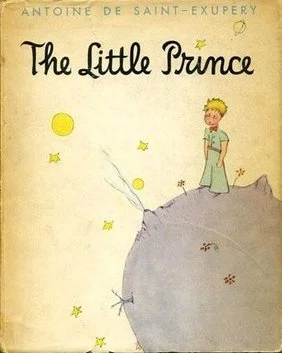
“Grown-ups never understand anything by themselves, and it is tiresome for children to be always and forever explaining things to them”